What to Actually Look For in an Eco-Friendly Scent Booster?

Start here: most of the label is meaningless
"Plant-based." "Naturally derived." "Non-toxic." "Clean." None of these have regulatory definitions in the US for laundry products. Any brand can print any of them, including us.
There's a finding worth sitting with. In a 2015 study of 37 consumer products, products marketed as green, natural or organic emitted essentially the same carcinogenic hazardous air pollutants as conventional ones. Fewer than 3% of the compounds detected appeared on any label or safety data sheet.
So treat the front of the pack as decoration. Here's what's actually checkable.
1. Does it disclose fragrance allergens?
This is the fastest signal of whether a brand is being straight with you.
There is no federal requirement for laundry products to disclose ingredients. None. The only meaningful US mandate is California's Cleaning Product Right to Know Act, which requires designated cleaning products to list fragrance allergens present at 100 ppm or more — online since January 2020, on-label since January 2021.
Note what that does and doesn't cover. Allergens, not the full fragrance formula. A product can comply and still tell you very little.
What to check: find the brand's ingredient page. If "fragrance" appears as a single word with nothing beneath it, they're doing the legal minimum. If there's a list of named allergens — limonene, linalool, citronellol, geraniol — someone has chosen to tell you more than they had to.
Neither makes a product dangerous. One tells you something about the company.
2. Is it fragrance-free, or just "unscented"?
These are different words and the difference is real.
Fragrance-free should mean no fragrance was added. Unscented often means a masking fragrance was added to cover the base smell of the raw ingredients — so an "unscented" product can contain more fragrance chemistry than a lightly scented one.
This matters if anyone in the house reacts. Up to 4.5% of adults have a contact allergy to one or more fragrances, according to the American Contact Dermatitis Society's journal. That's about one person in twenty-two — not rare.
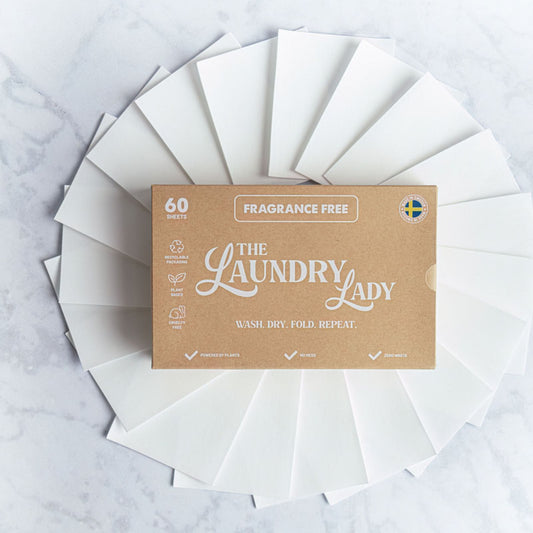
And the honest note: if that's your household, the eco-friendly scent booster you're looking for might be no scent booster. We make a fragrance-free sheet and we'd rather sell you that one.
3. Ask about 1,4-dioxane
This is the most concrete thing on the list, and almost nobody asks.
1,4-dioxane isn't an ingredient. It's a contaminant — a by-product formed during ethoxylation, a common step in making surfactants. Which means it can be present in a product whose ingredient list looks entirely clean.
The EPA characterises it as "likely to be carcinogenic to humans." New York regulates it directly: under state law, household cleansing products have been capped at 2 ppm since 31 December 2022 and 1 ppm since 31 December 2023, per the Department of Environmental Conservation.
What to check: whether the brand mentions it at all. A company that tests for 1,4-dioxane and publishes the result is telling you something that costs money to know. Most say nothing, because nothing is required.
4. Look at the packaging honestly
Plastic-free packaging is one of the few claims you can verify by holding the box.
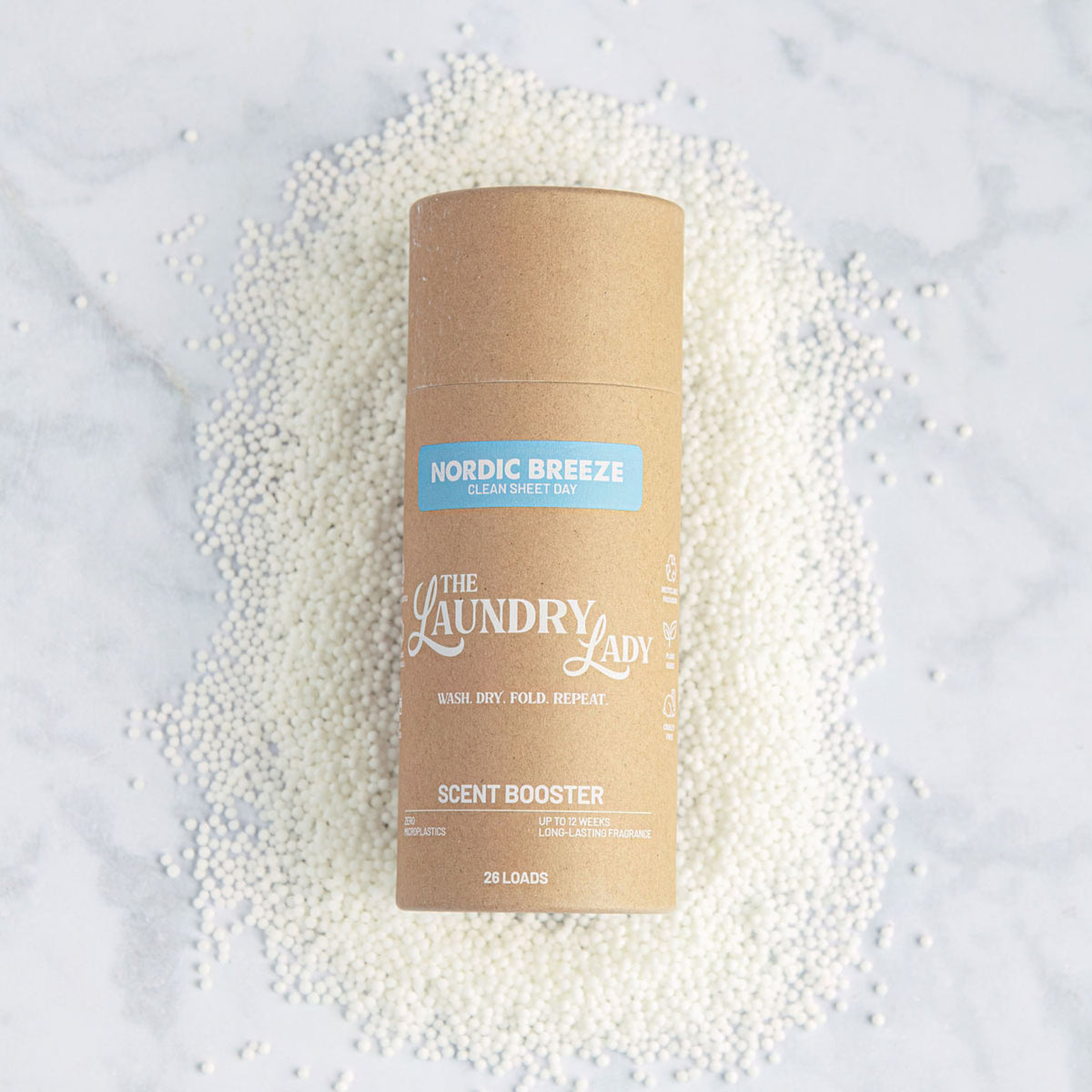
A scent booster in a rigid plastic tub is shipping a plastic container to you, which you'll put in recycling, where a meaningful share won't be recycled. Cardboard is genuinely better. Concentrated and lightweight is genuinely better, because freight emissions scale with weight and volume.
Be sceptical of "recyclable," though. Technically recyclable and actually recycled are different claims, and only one of them is about the real world.
5. What happens after it goes down the drain
The part nobody can see, and where the marketing gets loudest.
Reasonable questions: is the surfactant readily biodegradable? Is there a septic statement? Are there optical brighteners — the fluorescent compounds that make whites look whiter by staying on fabric rather than washing out?
And one claim to be suspicious of, including from us
You will see eco brands describe PVA — polyvinyl alcohol, the film in detergent pods and some sheets — as a "hidden microplastic."
That claim doesn't survive contact with the regulations.
Under EU Regulation 2023/2055, the only binding legal definition of microplastics anywhere, a synthetic polymer microparticle has to be solid, and polymers with solubility above 2 g/L are explicitly excluded. PVA dissolves. It isn't a microplastic under that definition.
In 2023 a coalition of environmental groups petitioned the EPA to require testing of PVA and downgrade it on the Safer Choice list. The EPA denied the petition, concluding the weight of evidence showed PVA meets Safer Choice criteria.
There are real open questions — how completely it degrades depends on wastewater plant conditions, and roughly one in five US households is on a septic system rather than a treatment plant. Those are worth asking about. "It's liquid plastic" isn't; it's a marketing line that contradicts the regulator.
We'd rather tell you that and lose the easy argument.
The five-minute version
|
Check |
Good sign |
Means little |
|---|---|---|
|
Fragrance disclosure |
Named allergens listed |
The word "fragrance" alone |
|
Scent-free option |
Says "fragrance-free" |
Says "unscented" |
|
1,4-dioxane |
Tested, result published |
Not mentioned |
|
Packaging |
Cardboard, concentrated, light |
"Recyclable" plastic tub |
|
Down the drain |
Readily biodegradable surfactants, septic statement |
"Plant-based," "natural," "clean" |
The question underneath all of this
Worth asking before you buy anything: do you want your laundry to smell like something, or do you want it to stop smelling bad?
Those need opposite solutions. If it's the second, a scent booster is the wrong purchase — you need a clean machine and laundry that isn't sitting wet, and adding fragrance will make it worse. Apartment Therapy's piece on alternatives to dryer sheets is a decent starting point if you'd rather not add scent at all.
If it's genuinely the first — clean laundry, and you'd like it to smell like something for longer — then the checks above will tell you more in five minutes than the front of any box.
Common questions
What makes a scent booster eco-friendly?
Verifiable things: readily biodegradable surfactants, plastic-free packaging, allergen disclosure, no optical brighteners, and testing for contaminants like 1,4-dioxane. Not the words on the front.
Is "plant-based" regulated?
No. There's no legal definition for laundry products in the US, and research has found green-marketed fragranced products emit similar hazardous compounds to conventional ones.
Is PVA a microplastic?
Not under EU Regulation 2023/2055, the only binding definition, because it's water-soluble rather than solid. There are legitimate open questions about how completely it degrades, particularly on septic systems.
What's the most eco-friendly way to make laundry smell good?
Getting it genuinely clean and drying it promptly does most of the work. Line drying adds a scent no product replicates. After that, a concentrated product in plastic-free packaging.