Washer or Dryer? Where Do Scent Boosters Actually Go

The one-sentence answer
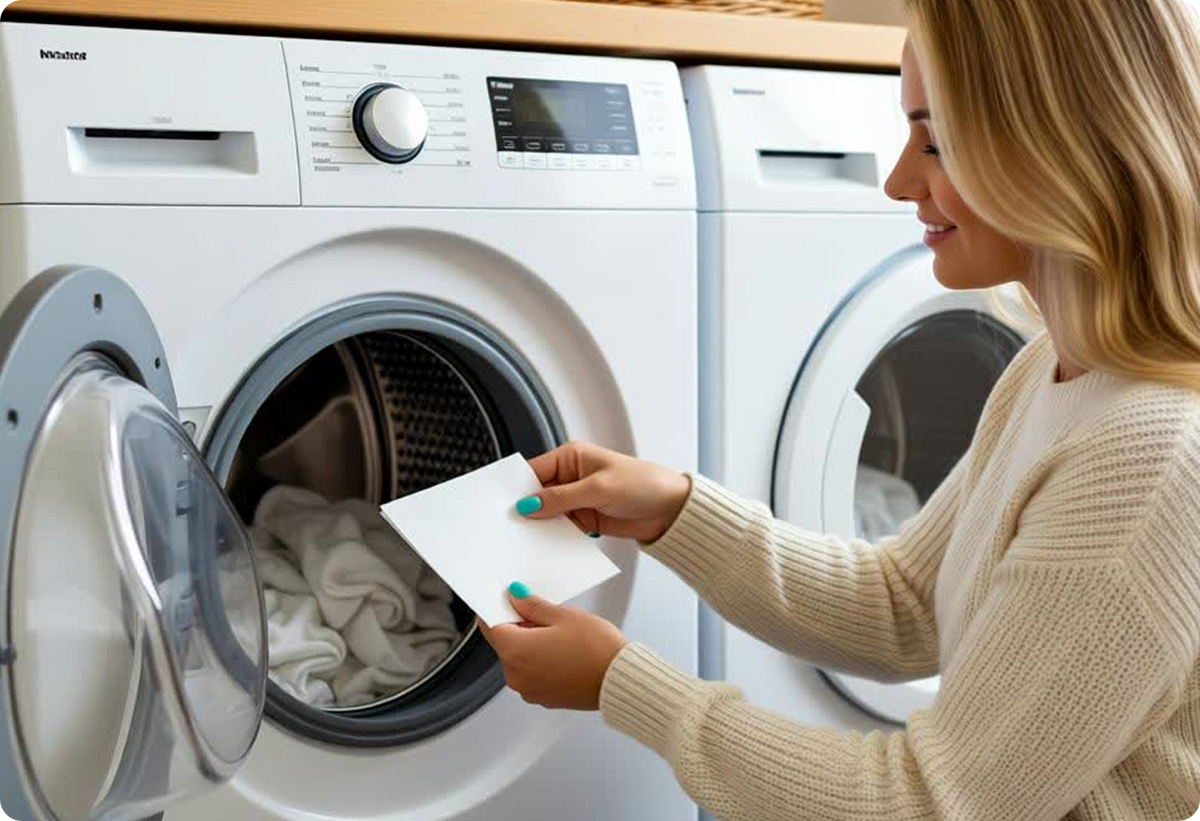
In the washer, in the drum, before you put the clothes in. Not in the detergent drawer. Not in the dryer.
That's it. The rest of this explains why, and what actually happens when you get it wrong — because the failure modes are more interesting than the rule.
Why the drum and not the drawer
The detergent drawer is designed for liquid and powder. Water flushes through it at a specific point in the cycle and carries the contents into the drum.
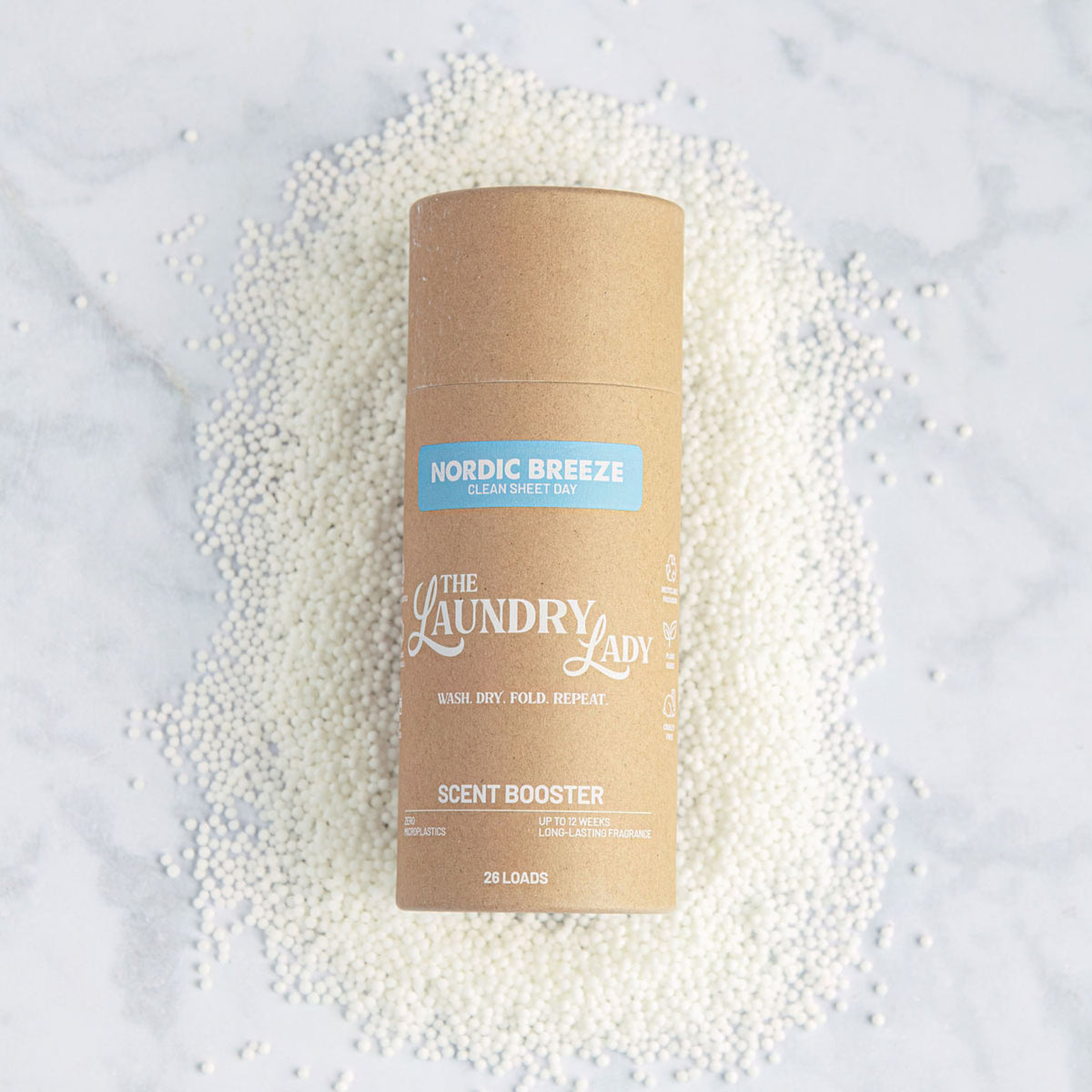
Scent beads are neither. They're solid granules that need time sitting in water to dissolve, and a drawer gives them a short flush and no contact time. Put them there and one of two things happens: they wash through half-dissolved and you've wasted the dose, or they sit in the drawer and slowly gum it up. Anyone who has cleaned a crusted-over detergent drawer knows which is worse.
Straight into the empty drum, they land where the water pools first and get the whole fill cycle to dissolve.
Why before the clothes, not on top
This one seems fussy and isn't.
Beads tipped on top of a loaded drum get caught in the fabric. They sit in a fold of a towel, half-dissolve against one spot, and deposit a concentrated hit of fragrance and carrier in that exact place. That's the actual cause of most "scent beads stained my clothes" complaints — not a defective product, just undissolved concentrate sitting against fabric.
Beads first, clothes second. The load goes in on top and the beads dissolve underneath as the drum fills.
The dryer question
People ask this constantly, and the answer is no, but the reason isn't what you'd expect.
It isn't dangerous, exactly. It just doesn't work, and it makes a mess.
Scent boosters are water-activated. A dryer has no water. What it has is heat and tumbling, so the beads soften rather than dissolve — and soft, sticky, fragrance-loaded granules tumbling against warm fabric leave residue on your clothes and on the drum. You'll spend longer cleaning it out than you saved.
If you want fragrance at the drying stage, that's what dryer sheets are for — though experts quoted by Today make a reasonable case against those too, mainly the waxy buildup on lint screens and the effect on towel absorbency.
Front-loader vs top-loader
The rule is the same in both. The reason differs slightly.
Front-loaders use a small amount of water and tumble rather than agitate. Contact time is shorter and water volume is lower, so beads sitting in the bottom of the drum before loading matters more here, not less. Front-loaders are also the machines most prone to residue problems generally — the low water volume that makes them efficient is the same thing that leaves deposits behind, which is why the gasket needs cleaning in a way top-loader owners never think about.
Top-loaders fill with more water and agitate, so dissolution is easier. Still put the beads in first. If your machine has a centre agitator post, tip them around the base of it rather than down the middle.
How much to use
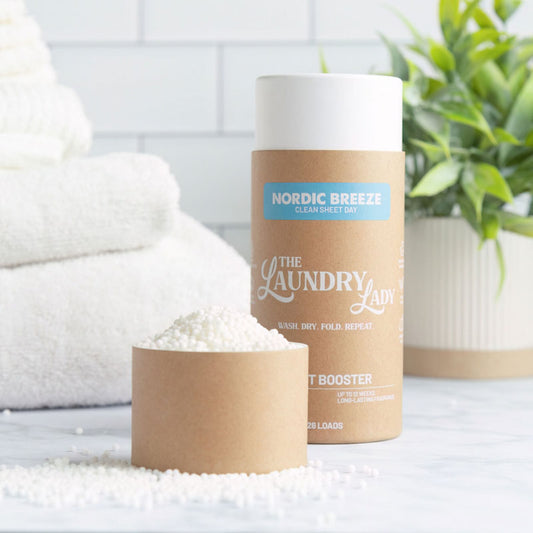
Use the cap, and use less than you think.
Most caps have fill lines that nobody looks at. The lines are there because dosing is not linear — past a point, extra product doesn't deposit more fragrance on fabric, it just adds residue to the machine and load to the wastewater.
Start at the lowest line. If the scent isn't lasting, the thing to change is your drying temperature or how you store the clothes, not the dose. Apartment Therapy's laundry guide makes the same point about detergent, and Today lists over-dosing among the most common laundry mistakes for exactly this reason.
What happens if you get it wrong
|
What you did |
What happens |
Fix |
|---|---|---|
|
Put them in the detergent drawer |
Partial dissolution, wasted dose, sticky buildup in the drawer |
Pull the drawer, soak in hot water, scrub. Use the drum next time. |
|
Put them in the dryer |
Softened residue on drum and clothes, little to no scent |
Wipe the drum with a damp cloth, run a load of old towels. |
|
Tipped them on top of the clothes |
Concentrated spots, possible marks on fabric |
Rewash affected items alone. Beads first next time. |
|
Used far too much |
Residue in the machine, no extra scent |
Run an empty hot cycle. Drop to the lowest cap line. |
|
Used them instead of detergent |
Clothes aren't clean, they just smell clean |
Rewash with detergent. |
The order, start to finish
-
Open the empty drum.
-
Tip the measured scent booster straight into the bottom.
-
Load the clothes on top. Don't pack it — a hand's width of space at the top.
-
Add detergent as normal, to the drawer or the drum depending on format.
-
Run the cycle. If your machine lets you choose, an extra minute of fill helps dissolution in cold water.
-
Move the load to the dryer or line promptly. Laundry left sitting wet will smell musty regardless of what you added.
Common questions
Do scent boosters go in the washer or the dryer?
The washer. Into the empty drum before the clothes, not the detergent drawer.
What happens if you put scent boosters in the dryer?
They soften instead of dissolving and leave sticky residue on the drum and your clothes. You get very little scent for the mess.
Can you put scent beads in the detergent drawer?
You can, but they won't dissolve properly and will gradually clog it. The drawer is designed for liquids and powders.
Do scent boosters go in before or after the clothes?
Before. Beads sitting on top of a loaded drum can lodge in fabric folds and leave concentrated marks.