Do Scent Boosters Leave Residue in Your Washing Machine?

The short answer
Yes, they can — particularly if you overdose them or wash cold. But if your machine smells, scent boosters are unlikely to be the main cause, and treating them as the villain means you'll clean the wrong thing and the smell will come back.
The real chain runs: residue → biofilm → smell → clothes that come out smelling worse than they went in. Scent boosters are one contributor. Fabric softener and too much detergent are usually bigger ones.
How residue actually forms
Every wash leaves something behind. Modern machines are efficient, and efficiency here means less water — a front-loader might use a third of what an old top-loader did. Great for your bill. Less good for rinsing.
Whatever doesn't rinse away settles in the places water doesn't reach at speed: the gasket fold, the detergent drawer, the drain hose, the outer tub you can't see.
Then biology takes over. That residue is organic material sitting in a warm, damp, dark drum. Bacteria colonise it and form biofilm — a stubborn layer that ordinary washing doesn't shift. Biofilm is what smells. Not the residue itself.
Which is why adding fragrance to a smelly machine does nothing. You're perfuming a bacterial colony.
Ranking the actual culprits
In rough order of how much trouble they cause:
1. Fabric softener
Softener works by depositing a lubricating film on fabric. That film doesn't discriminate — it coats your machine too, and it's specifically designed not to rinse off. It is the single most common cause of buildup in a home washer.
Many conventional softeners are built on quaternary ammonium compounds, which a 2023 review in Environmental Science & Technology classes as a chemical class of emerging concern. Worth noting that review is about health and environmental questions, not machine damage — the buildup problem is separate and well established on its own.
Experts quoted by Today describe the same waxy residue from dryer sheets, including on lint screens. One cleaning specialist in that piece puts it bluntly: fabric softener is just the liquid version of the same thing.
2. Too much detergent
This is the one nobody believes.
Detergent is designed to be rinsed out at a specific concentration. Exceed it and the extra doesn't clean better — there isn't enough water to carry it away, so it stays. In the machine and in your clothes. Today lists over-dosing among the four most common laundry mistakes, and in our experience it's the most common of the four by some distance.
If your clothes feel slightly stiff or your towels have stopped absorbing, look at your dose before you look at anything else.
3. Scent boosters, used badly
Here's where they genuinely contribute.
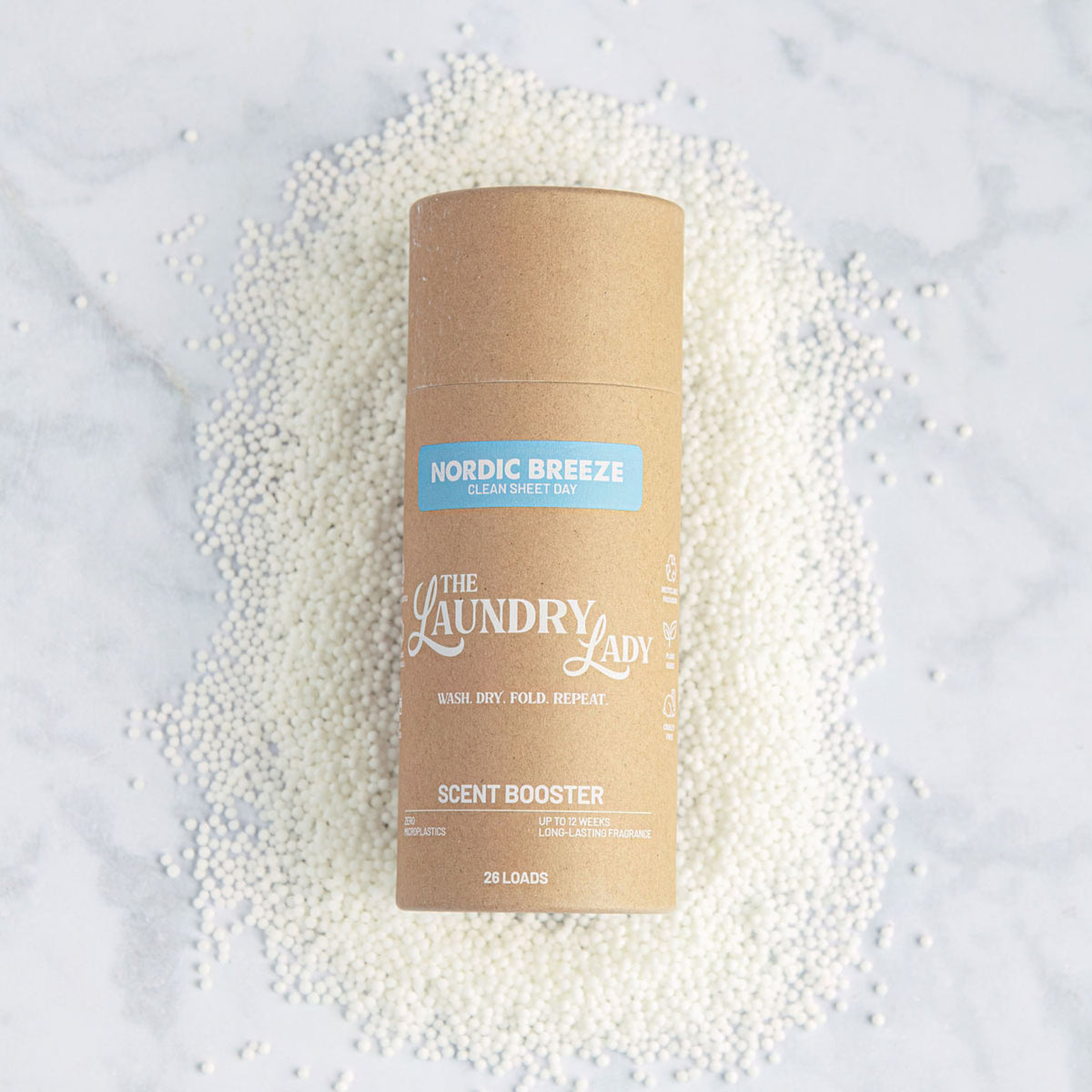
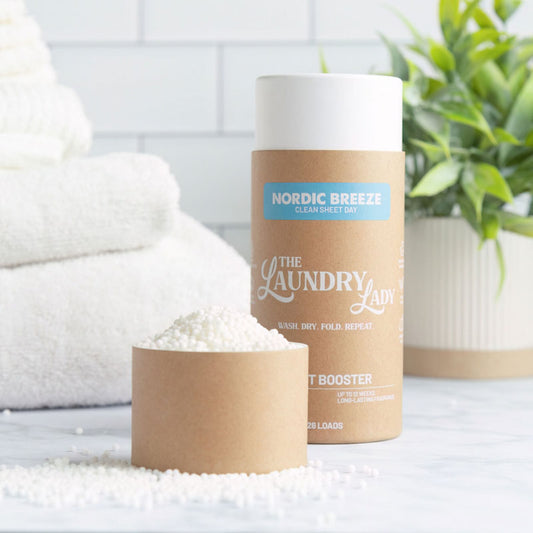
Beads need water and time to dissolve. Deny them either and undissolved granules end up in the gasket fold or the drain. Specifically:
-
Cold washes. Bead dissolution slows sharply in cold water. Short cold cycles are the worst case.
-
Overdosing. More beads than the water can dissolve means the excess has to go somewhere.
-
Wrong placement. In the drawer, they gum it up. On top of clothes, they lodge in fabric.
Used at the right dose in a warm wash, in the drum, beads dissolve fully and contribute little. The complaints almost always trace back to one of those three mistakes.
4. Hard water
Not a product at all, but it compounds everything. Calcium and magnesium react with detergent to form limescale and soap scum, and that scale gives biofilm something to grip. If you're in a hard water area, you'll get buildup faster no matter what you use.
How to tell whether you have a problem
Open the door on a machine that's been sitting empty and dry for a day, and check:
-
The gasket fold. Peel back the rubber seal on a front-loader. Dark or grey patches, slimy texture, visible grit. This is where it lives.
-
The drawer. Pull it right out. Crust, sludge, anything blue or pink that isn't meant to be there.
-
The smell. Stick your head in. Musty, sour or sweetly chemical all mean buildup.
-
Your laundry. Clothes that come out smelling faintly off, towels that stopped absorbing, or a load that smells fine wet and musty once dry.
That last one catches people out. Damp fabric masks the smell; drying concentrates it.
Clearing it
Order matters here. Most people run a cleaning cycle and stop, which is why the smell returns.
-
The gasket first, by hand. No cycle reaches into that fold. Peel it back, wipe it out with a cloth, get into the channel at the bottom where water pools. This is the step people skip and it's the step that matters. Apartment Therapy's guide walks through it.
-
The drawer, removed. Take it out entirely and soak it in hot water. Scrub the housing it sits in too.
-
The filter. Front-loaders have a drain filter behind a panel at the bottom front. Many owners have never opened it. Put a towel down first.
-
Then run a hot maintenance cycle. Empty drum, hottest setting, machine cleaner or a cup of white vinegar. This is the last step, not the first.
-
Leave the door open afterwards. The single highest-value habit change. A drum that dries out between loads doesn't grow biofilm. Today recommends cleaning every six months and leaving the door ajar between loads.
If your laundry has already picked up the smell, the machine clean won't fix the clothes. Towels in particular need their own treatment.
How to avoid it in the first place
-
Leave the door and the drawer open between loads.
-
Move laundry out of the drum promptly. Hours matter.
-
Dose by the lines, not by eye. Halve what you're using and see if anything actually gets worse.
-
Run one hot cycle a month. Cold washing is good for your bill and your clothes, but a machine that never gets hot never resets.
-
Put beads in the drum, not the drawer, and give them warm water or a longer fill.
-
If you use softener, this is the argument for stopping.
Common questions
Do scent boosters ruin your washing machine?
No. Used at the correct dose in the drum they dissolve fully. Overdosing or short cold cycles can leave undissolved residue, which contributes to buildup over time.
Why does my washing machine smell even after cleaning it?
Almost always the gasket fold or the drain filter — neither is reached by a cleaning cycle. Both need doing by hand.
Is fabric softener or scent booster worse for my machine?
Softener, clearly. It deposits a film by design and is engineered not to rinse away.
Should I stop using scent boosters if my machine smells?
Clean the machine properly first. If the smell returns within a few weeks, then change one variable at a time — starting with detergent dose, which is the usual answer.