Do Scent Boosters Dissolve in Cold Water?

The short answer
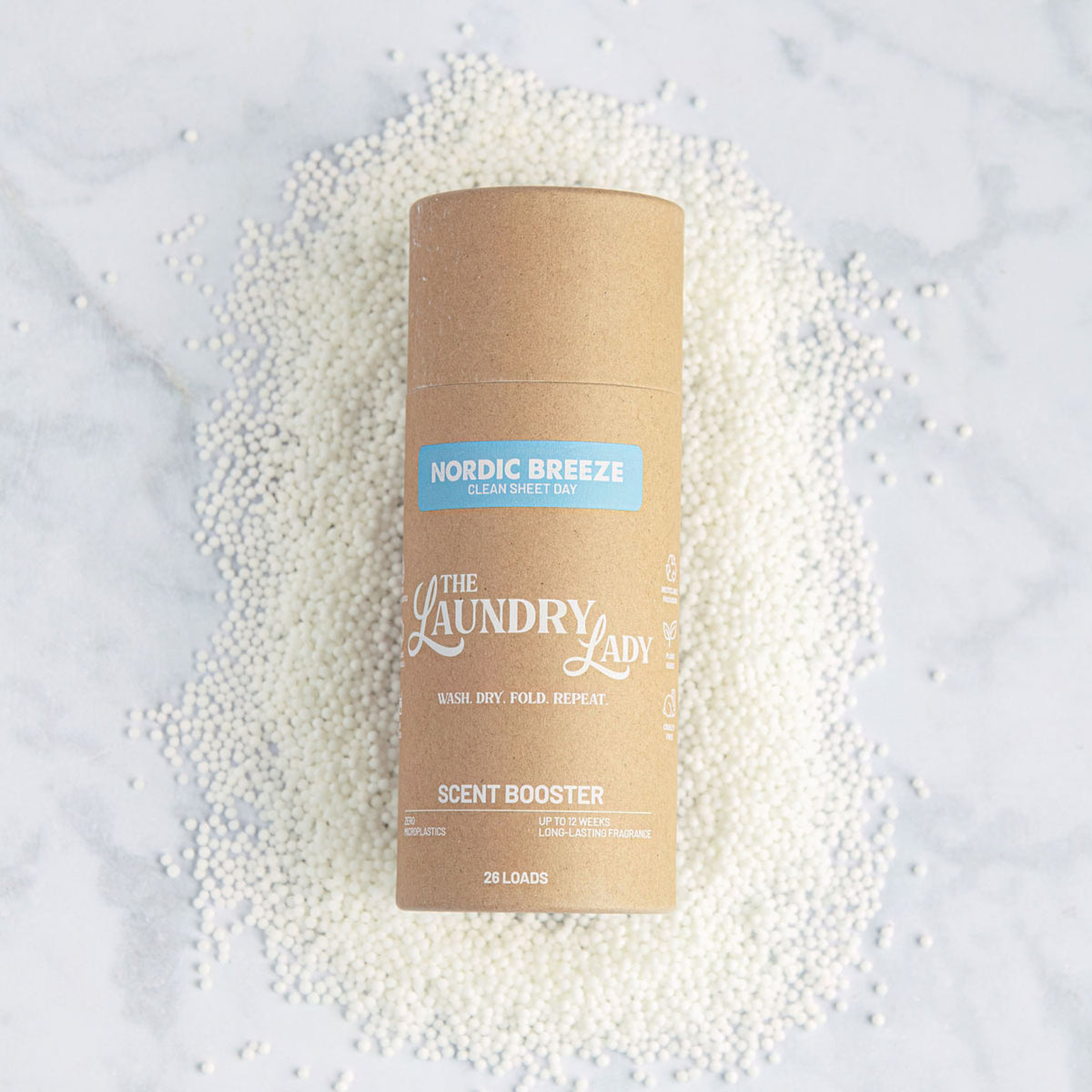
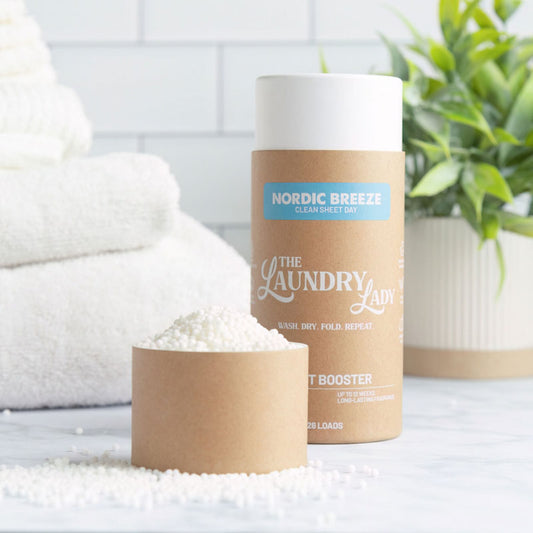
Bead-style scent boosters don't dissolve well in cold water, but Laundry Lady Scent Booster does. They're formulated to break down with heat and agitation, and a short cold cycle gives them neither.
This matters more than it used to, because cold washing has gone from a compromise to the default — and the product category never really caught up.
Why cold water became the norm
The energy maths is hard to argue with. Around 90% of the energy a washing machine uses goes into heating water, not turning the drum. A Tide scientist quoted by Apartment Therapy put concrete figures on it: roughly $282 a year washing hot, against about $20 washing cold.
That's a difference of around $262 a year for changing one dial setting.
And the old objection — that cold doesn't really clean — has largely been solved. Modern detergent enzymes are engineered to work at low temperatures. A Seventh Generation chemist makes the same point in a separate piece: the enzymes are cold-stable by design now.
Cold is also better for your clothes. Less shrinkage, less fading, less fibre damage. There are genuine exceptions — sanitising, heavy grease, bedding after illness — but for everyday laundry, cold wins.
Which leaves scent beads with a problem.
What's actually happening in the drum
Dissolution needs three things: temperature, time and turbulence. Cold washing reduces all three at once.
Temperature is the obvious one. Solubility drops as water gets colder, and for a solid granule that drop is steep, not gradual.
Time is less obvious. Cold cycles are often shorter, and eco settings on many machines cut the fill and shorten the wash.
Turbulence is the one nobody thinks about. Front-loaders tumble rather than agitate, and use far less water. A bead sitting in a shallow pool of cold water in a gently tumbling drum is in close to the worst conditions you could design.
The result is partial dissolution. Some fragrance deposits, some doesn't, and the undissolved remainder ends up in the gasket fold or the drain filter — which is how this turns into a machine smell problem months later.
How to tell it's happening
-
Visible granules in the drum or the gasket after a cycle finishes.
-
Scent that's noticeably weaker than the same product gave you in summer — incoming water temperature drops in winter, and cold isn't a fixed temperature.
-
Gritty residue on dark fabrics.
-
Concentrated scent patches instead of an even, light fragrance across the load.
-
Buildup appearing in the machine faster than it used to.
That seasonal one is worth dwelling on. Your "cold" tap in January might be 8°C and in July 20°C. Same setting, very different chemistry. If your scent booster works fine in August and disappoints in February, this is why.
What to do about it
Roughly in order of how much difference each makes:
Put them in first, in the empty drum
Beads need to be where water hits first and pools longest. In the drawer they get a brief flush; on top of the clothes they lodge in fabric. In the bottom of an empty drum, they get the full fill.
Use a longer cycle, not a hotter one
If your machine offers a pre-soak, extra rinse or longer wash, that added contact time does more for dissolution than nudging the temperature up — and it keeps the energy saving. A cold wash on a longer cycle beats a warm wash on a quick one, for both dissolution and your bill.
Dissolve them first
Slightly inelegant, completely effective: put the dose in a mug of warm water, stir until it's gone, tip the liquid into the drum. Thirty seconds, and it takes the temperature variable off the table entirely.
If you find yourself doing this every load, that's information about the product.
Use less
Counterintuitive and reliable. There's a fixed amount of product a given volume of cold water can dissolve. Beyond it, extra beads aren't adding scent — they're adding residue. Over-dosing is on Today's list of common laundry mistakes, and it applies to boosters as much as detergent.
Or change format
The underlying issue is physical: you're asking a solid granule to dissolve in cold water in a short cycle with little turbulence.
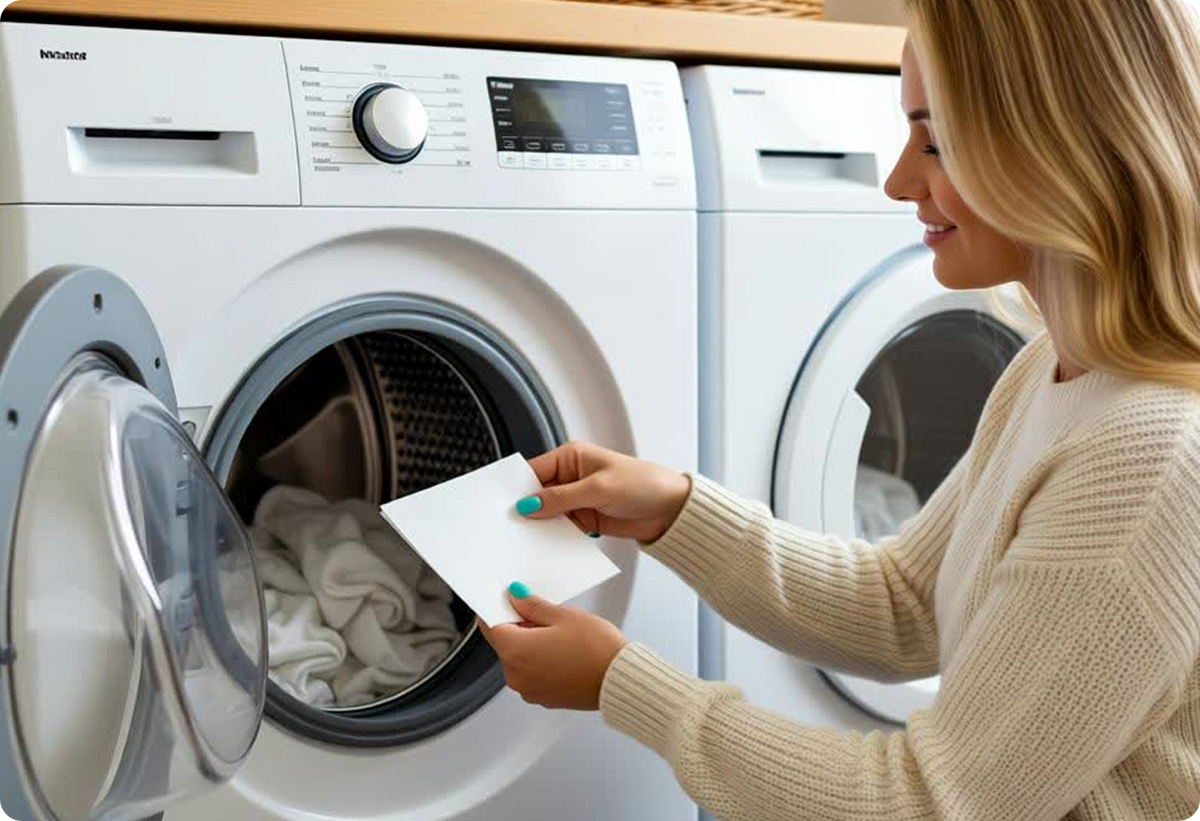
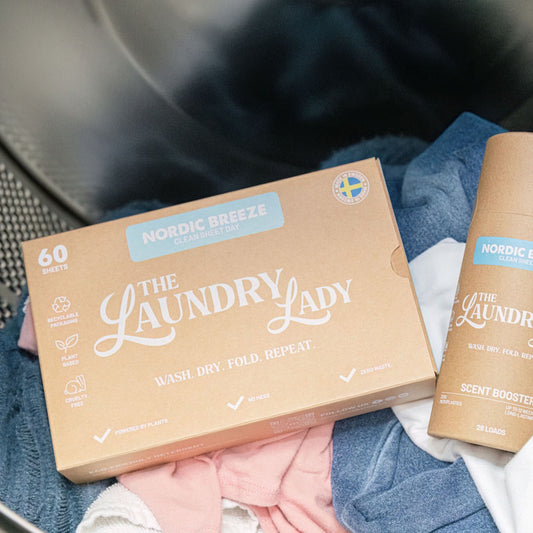
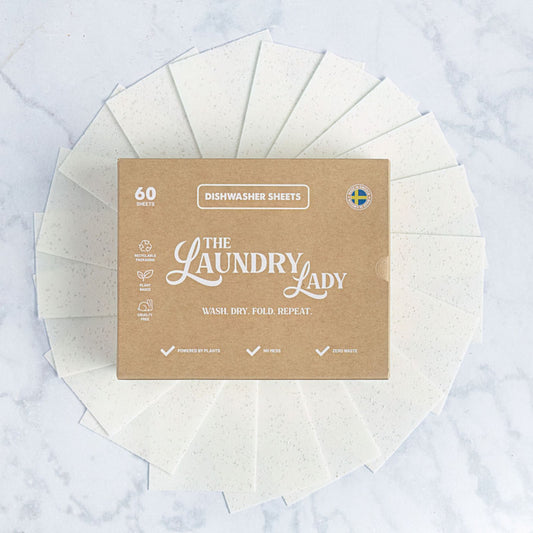
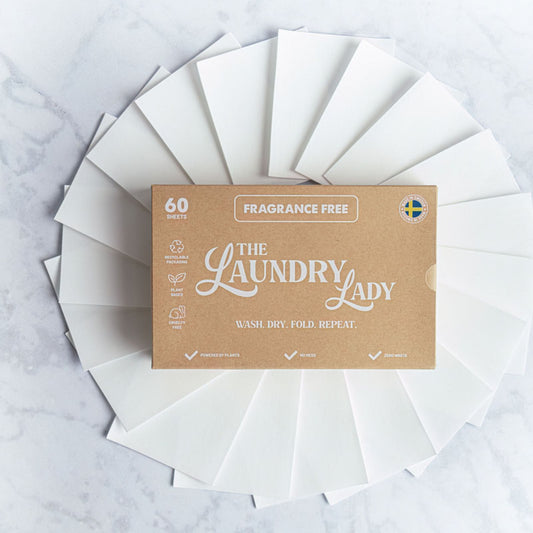
This is the honest case for sheet-format products, and it's why ours is a sheet. A thin sheet has enormously more surface area relative to its mass than a bead does, so it disperses on contact rather than needing sustained heat. It's not a marketing claim, it's geometry — the same reason sugar dissolves faster than a sugar cube.
We'd rather you knew the mechanism than took our word for it, because it applies to any sheet product, not only ours.
A note on what cold water doesn't fix
If you switch to cold and your laundry starts smelling musty, don't blame the temperature. Cold washing doesn't cause odour — but it's less forgiving of a machine that already has buildup, because there's no hot cycle periodically resetting things.
Run one hot maintenance wash a month on an empty drum. You keep the savings on the other twenty-nine loads and the machine never gets the chance to establish biofilm. Apartment Therapy's energy round-up covers the wider savings picture, including air drying, which is where the next big chunk of money sits.
Common questions
Do scent beads dissolve in cold water?
Partially. They're formulated for heat and agitation, and cold cycles typically supply neither. Expect weaker scent and some residue.
Why are there beads left in my washing machine after the cycle?
Water too cold, cycle too short, dose too high, or they went in on top of the clothes instead of into the empty drum.
Can I dissolve scent beads before adding them?
Yes — dissolve the dose in warm water and pour it into the drum. It works reliably.
Do laundry sheets dissolve in cold water?
Much better than beads, because surface area rather than temperature drives it. Still put the sheet in the empty drum first rather than on top of the load.
Should I just wash warm instead?
That's a roughly $262-a-year decision to fix a dissolution problem. Longer cycle, lower dose, or a different format all cost less.