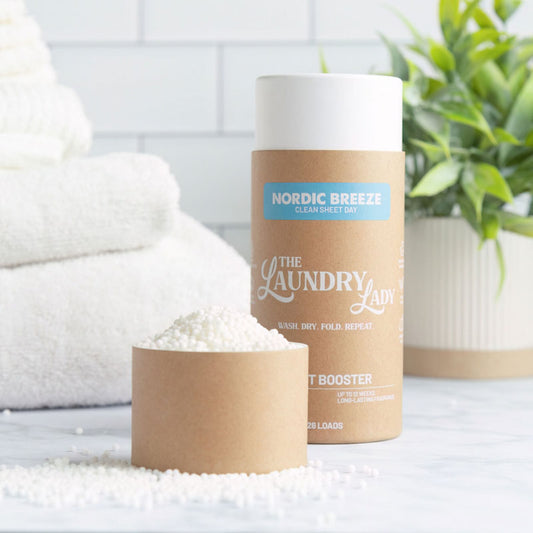
Do Scent Boosters Actually Work? An Honest Answer

The short answer
Yes — at one job, which is making clean laundry smell like something for longer than detergent alone manages. That's the entire job. They don't clean, they don't soften in any meaningful way, and they will not rescue a load that already smells musty.
Whether that's worth it depends entirely on which of those things you were hoping for.
What a scent booster is actually doing
Detergent fragrance has a problem: most of it leaves. It's designed to be rinsed away along with the soil it lifted, and by the time your clothes come out of the dryer, a large part of what you smelled in the bottle is gone.
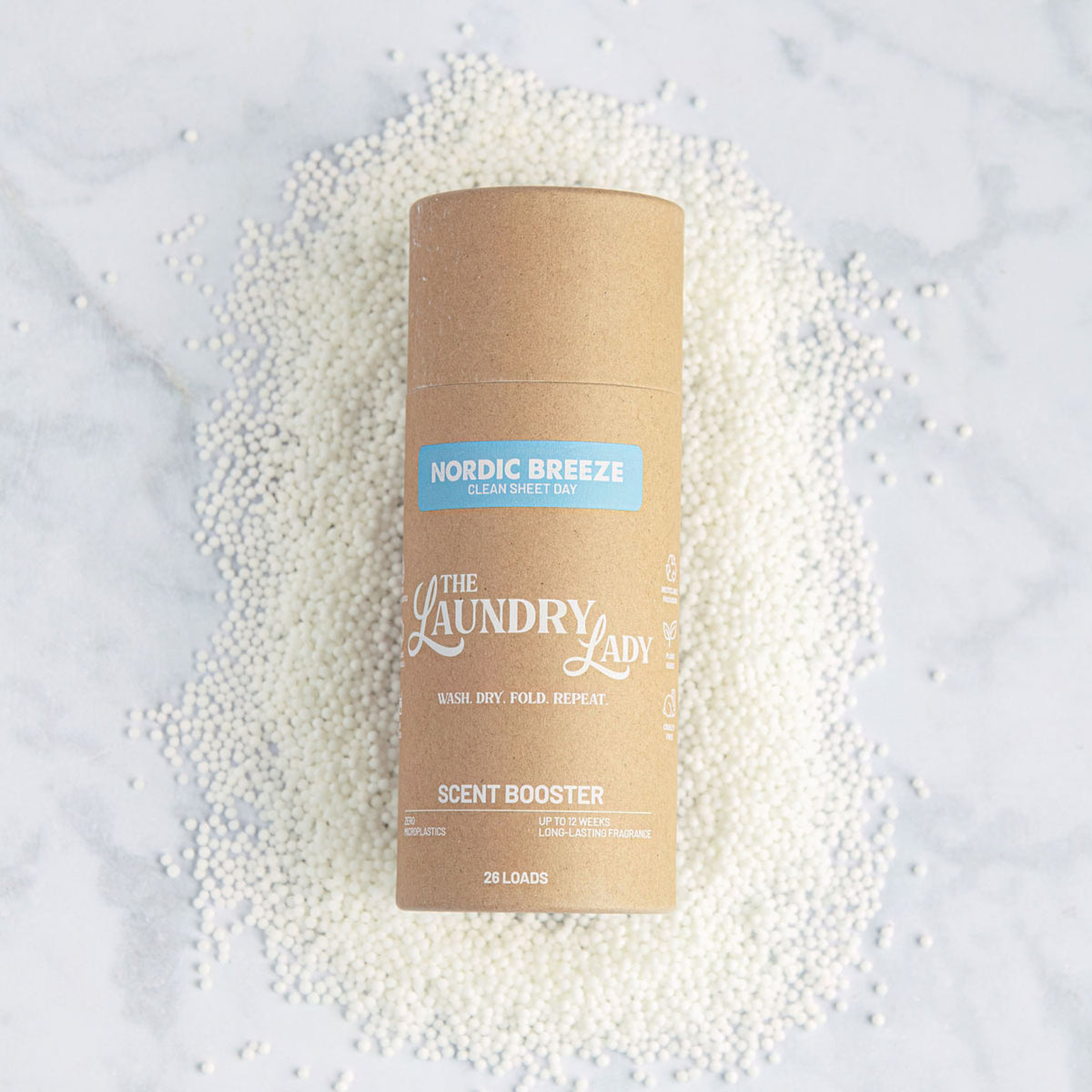
Scent boosters get around this by not being water-soluble in the same way. The fragrance is held in a carrier that deposits onto fabric during the wash rather than rinsing out with it, then releases slowly afterwards — a bit when the fabric warms, a bit when it moves against itself, a bit when you pull a shirt over your head three weeks later.
That's why the effect lasts. Not because there's more fragrance, but because it's engineered to stay put.
Apartment Therapy's round-up of laundry scent methods treats boosters as a standard tool alongside softener and dryer sheets, which is roughly where they sit: not a miracle, not a gimmick, a specific solution to a specific complaint.
Three things they don't do
They don't clean anything
This comes up constantly — people ask whether they can skip detergent and just use boosters. You can't. There are no surfactants in a scent booster. Nothing lifts soil, nothing suspends it, nothing carries it down the drain. Use a booster alone and you get dirty clothes that smell nice, which is worse than it sounds.
Boosters go in with detergent, not instead of it.
They don't soften fabric
Softener works by coating fibres with a lubricating layer, which is also why it causes problems — that coating builds up, and it's why towels get less absorbent and technical fabrics stop wicking. Experts quoted by Today describe the waxy residue dryer sheets and softener leave behind, including on kids' sleepwear where it can reduce flame retardancy.
Boosters deposit fragrance, not a lubricant film. Some people find laundry feels a little different; that's not softening in the technical sense. If softness is the goal, wool dryer balls do more.
They don't fix laundry that already smells
This is the big one, and it's where most disappointment comes from.
If your towels smell musty coming out of the wash, adding scent doesn't remove the smell. It layers over it. For about a day. Then you have mildew and perfume, which is a genuinely unpleasant combination.
Musty laundry has causes, and they're nearly always mechanical:
-
Wet laundry left sitting. Bacteria multiply in a damp drum within hours. This is the most common cause by a distance.
-
A dirty machine. Residue feeds biofilm, biofilm smells, and every load picks it up. Apartment Therapy's front-loader guide covers the gasket, which is where it hides.
-
Too much detergent. Counterintuitive, but excess detergent doesn't rinse out, and the residue holds odour. Today lists it among the four most common laundry mistakes, alongside overloading.
-
Overloading. Clothes need room to move or nothing rinses properly.
Fix those first. Apartment Therapy has a solid three-step method for towels that have gone past the point of a normal wash. Then, if you want your laundry to smell like something, add scent to laundry that's already genuinely clean.
How long the scent actually lasts
Brands quote figures in weeks. Treat those as best-case.
What actually determines it:
-
Fabric. Cotton and cotton blends hold fragrance well. Synthetics and technical fabrics hold it poorly.
-
How you dry. High heat drives off volatile fragrance compounds. Line drying keeps more.
-
Storage. A folded shirt in a closed drawer holds scent far longer than one hanging in an open wardrobe.
-
Your nose. Olfactory adaptation is real — you stop registering a constant smell within minutes. Your laundry probably smells more than you think it does. Ask someone who doesn't live with you.
Are you using too much?
Almost certainly, if you're unhappy with the result.
The instinct when scent fades is to add more next time. It doesn't work like that. Past a certain point you're not increasing what deposits on the fabric — you're just adding more product to the water, which means more residue in the machine and more going down the drain.
Use the cap. If a normal dose isn't lasting, the variable to change is drying temperature or storage, not quantity.
When a scent booster is the wrong product
Genuinely, don't buy one if:
-
Anyone in the house reacts to fragrance. Up to 4.5% of adults have a contact allergy to one or more fragrances, according to the American Contact Dermatitis Society's journal. Adding a concentrated, long-lasting fragrance is the opposite of what a reactive household needs.
-
You're trying to mask an odour problem. See above. Fix the cause.
-
You wash mostly technical fabrics. Activewear doesn't hold fragrance well and has its own odour chemistry. You'll be disappointed.
-
You want softer towels. Wrong tool. Wool dryer balls and skipping softener entirely will do more.
Common questions
Do scent boosters wash your clothes?
No. They contain no cleaning agents. Always use detergent as well.
Can I use a scent booster instead of fabric softener?
Yes, and for towels and activewear it's the better choice — you get fragrance without the coating that reduces absorbency and wicking.
Why doesn't the scent last on my clothes?
Usually high dryer heat, synthetic fabrics, or open storage. Adding more product rarely helps.
Do scent boosters work in cold water?
It depends on the format. Bead-style boosters are the ones that struggle. We cover this in detail in our post on cold-water washing.