Are Scent Beads Actually Safe? What's Really Inside Them?

The short answer
No regulator classifies laundry scent beads as unsafe, and there is no study showing that normal household use of them causes cancer. If that is what brought you here, you can stop worrying about the worst-case version.
But "not classified as dangerous" is doing a lot of work in that sentence, and the honest version is more interesting. Scent beads are one of the least-regulated things under your sink, the research that does exist is thin, and roughly one in twenty adults will react to fragrance regardless of what the label says.
Here is what's actually known, and what isn't.
What's inside a scent bead
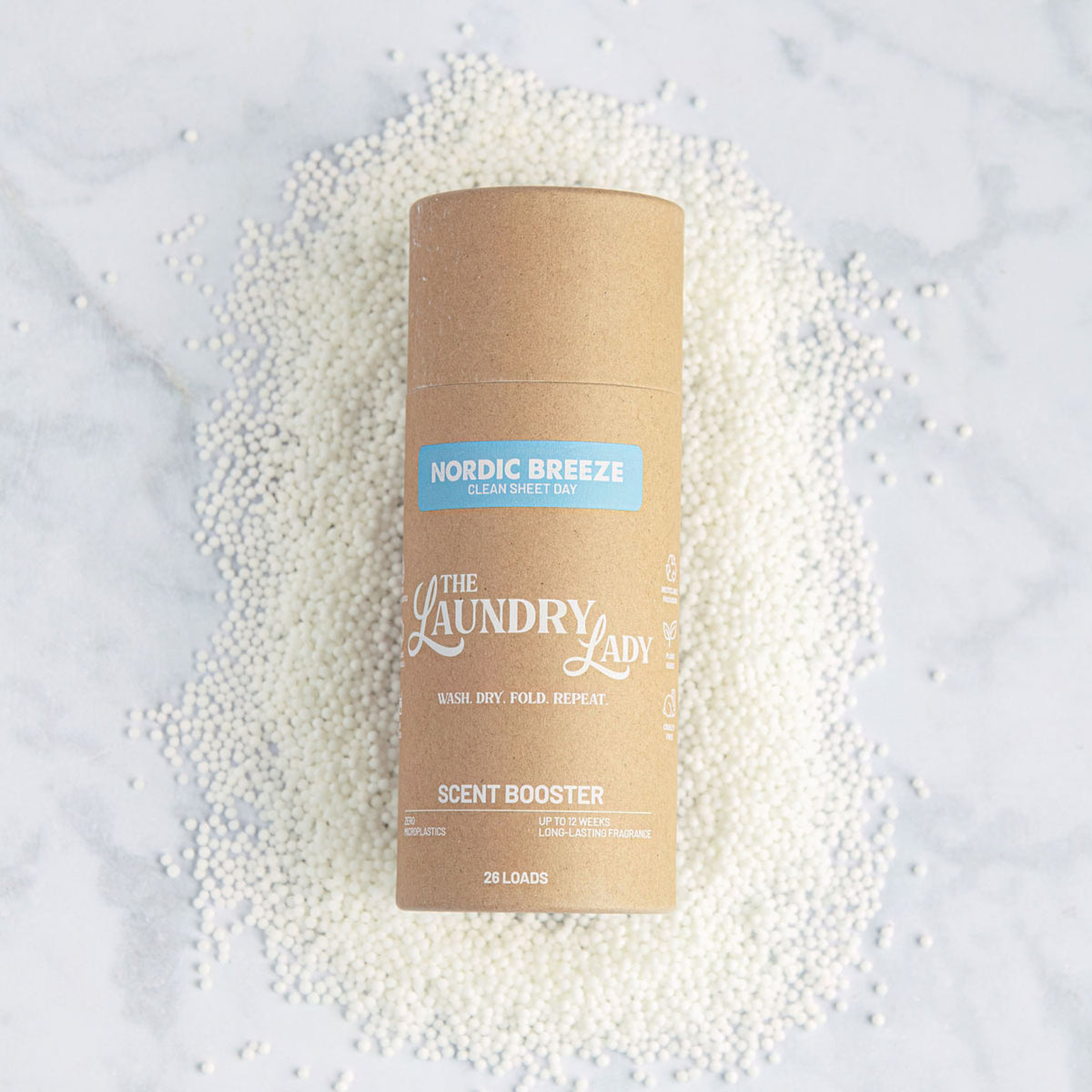
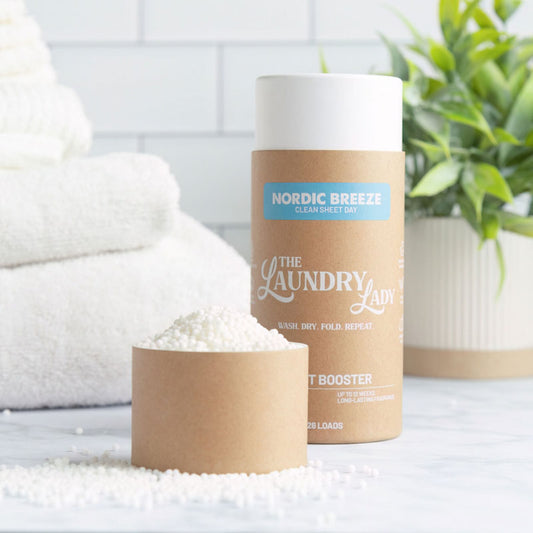
Most scent beads are three things: a carrier salt that dissolves in water, a polymer that holds the fragrance in place, and the fragrance itself. That last one is usually 90% of the story and 0% of the label.
The fragrance in a single scent product can be a blend of dozens of individual aroma chemicals. You will never see them listed. You'll see one word.
Why "fragrance" is legally allowed to mean anything
This is the part most people get wrong, including a lot of brands writing about it.
You'll read that the FDA permits companies to hide fragrance ingredients as a trade secret. That's true — for cosmetics. Laundry products aren't cosmetics. They fall outside that framework entirely, and here's the uncomfortable part: there is no federal ingredient disclosure requirement for laundry products at all.
The only meaningful mandate in the United States is a state law. California's Cleaning Product Right to Know Act (SB 258) requires designated cleaning products to disclose fragrance allergens at 100 parts per million or above — online from January 2020, on the label from January 2021. It's a real improvement. It also stops well short of the full formula. A product can comply perfectly and still tell you almost nothing.
So when a label says "fragrance," that is not a company being evasive. That is a company doing exactly what the law asks.
The research on fragranced laundry products
The most-cited work here comes from Anne Steinemann at the University of Washington. Her team sampled the air coming out of residential dryer vents during use of fragranced detergent and dryer sheets, and found more than 25 volatile organic compounds, with acetaldehyde among the highest concentrations.
That study gets quoted constantly, and almost always badly. Two things to hold onto:
It sampled two dryers. Two. It establishes that these compounds are present and vented outdoors. It does not establish dose, and it does not establish risk. The paper itself makes no claim about harm.
Acetaldehyde is Group 2B, not Group 1. The IARC classification is "possibly carcinogenic to humans." There is a Group 1 listing for acetaldehyde, but it applies to acetaldehyde produced when your body metabolises alcohol — a completely different exposure route. Conflating the two is the single most common error in this entire topic, and once you've seen it you'll notice it everywhere. California lists acetaldehyde under Proposition 65 with a no-significant-risk level of 90 micrograms per day by inhalation, which gives you a sense of the scale being discussed.
One finding from Steinemann's larger 2015 study of 37 consumer products deserves more attention than it gets, especially from brands like ours. Products marketed as green, natural or organic were not meaningfully lower in carcinogenic hazardous air pollutants than conventional ones. Fewer than 3% of the compounds detected appeared on any label.
That should make you skeptical of us too. "Plant-based" on a bottle is a marketing claim, not a toxicology result.
The thing that's actually likely to affect you
Forget cancer for a moment. The realistic risk from fragrance is much more boring and much more common: your skin.
According to a 2020 review in Dermatitis, the journal of the American Contact Dermatitis Society, up to 4.5% of the general adult population has a contact allergy to one or more fragrances. That's roughly one person in twenty-two.
You'll see much bigger numbers quoted — 12.7% is a favourite. That figure is real but it describes patients already referred to a clinic for suspected contact dermatitis. Using it as a population figure overstates the problem by about three times. 4.5% is the number that applies to you and your family.
If someone in your house has eczema, reactive skin, or just gets itchy in ways nobody's explained, fragrance is worth eliminating for a few weeks as a test. Not because scent beads are dangerous. Because one in twenty-two is not a rare event when you're doing five loads a week.
What about fabric softener?
If you're evaluating scent beads, you're probably weighing them against fabric softener, and softener has a specific issue worth knowing about.
Many conventional softeners are built on quaternary ammonium compounds, or quats. A 2023 consensus review in Environmental Science & Technology, written by 26 researchers, classed them as a chemical class of emerging concern, noting associations with work-related asthma, skin sensitisation, and antimicrobial resistance. The paper names fabric softeners directly as a source.
Read that carefully, though. The asthma evidence comes from cleaning and healthcare workers with high occupational exposure, not from people using softener at home. "Emerging concern" means researchers think it warrants attention, not that household use has been shown to cause harm. Apartment Therapy covered this ground and landed in a similar place.
So should you use them?
Here's where we'll be straight with you, given we sell a scented booster.
If nobody in your household reacts to fragrance and you like the way scented laundry smells, there is no evidence-based reason to panic about scent beads. The catastrophic framing you'll find online isn't supported by the research it cites.
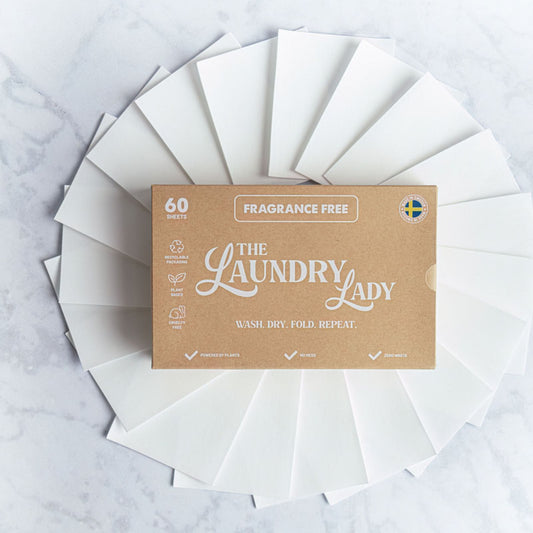
If someone in your house has sensitive skin, eczema, asthma or unexplained irritation, fragrance is the first thing to remove — and that includes ours. We make a fragrance-free sheet for exactly this reason, and we'd rather you bought that one than bought the scented one and regretted it.
And if what you actually want is laundry that doesn't smell bad, scent is the wrong tool entirely. Musty laundry is almost always a machine problem or a drying problem, and adding fragrance on top of it just gives you perfumed mildew. That's a different post.
Common questions
Do scent boosters cause cancer?
No study shows that. The research most often cited found that fragranced laundry products emit volatile compounds including acetaldehyde, which IARC classes as possibly carcinogenic — but it measured presence in two dryer vents, not dose, and made no claim about risk.
Are scent beads toxic?
Not by any regulatory classification. The realistic concern is fragrance sensitisation, which affects up to 4.5% of adults, not acute toxicity.
Are scent beads safe for kids?
The same fragrance-allergy consideration applies, and children's skin is more reactive. Keep the container sealed and out of reach — the beads look like candy, which is a genuine ingestion hazard and a more immediate risk than anything in the chemistry.
Is unscented actually better?
For sensitive skin, yes. Note that "unscented" sometimes means a masking fragrance was added to cover a base smell. "Fragrance-free" is the term that means what you want it to mean.